


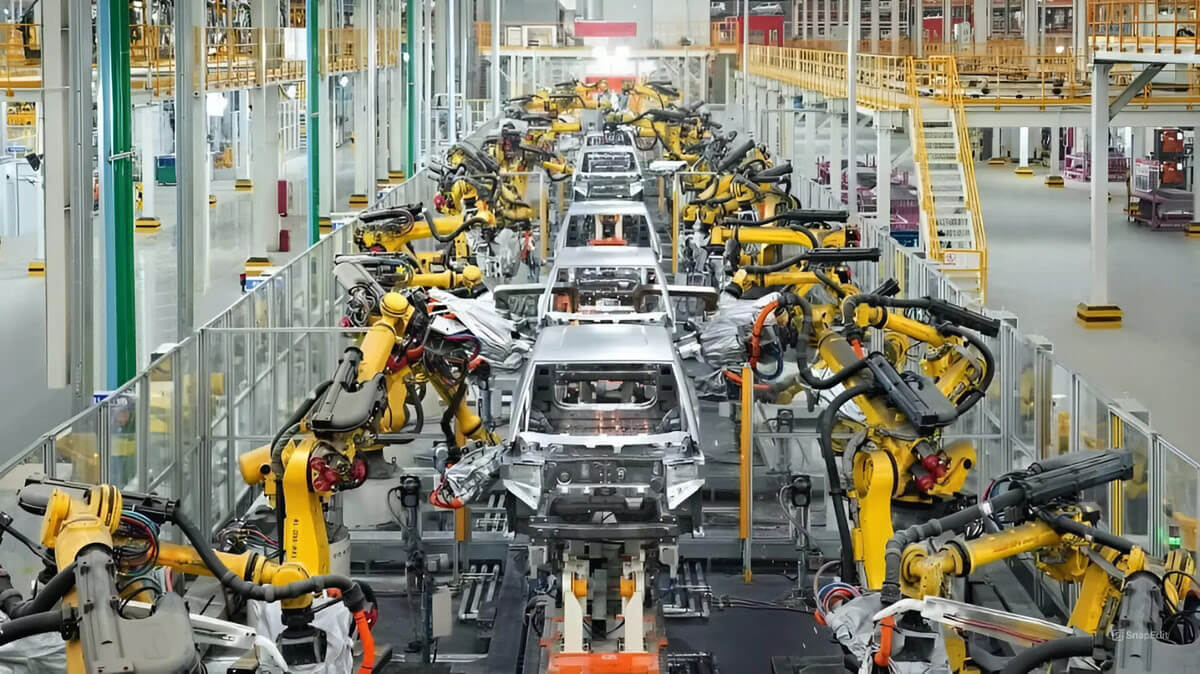
Chinese electric vehicle manufacturers are looking for alternative ways to enter the European market in response to the tightening of the European Union's customs policy.
In July 2024, the European Commission imposed additional tariffs on Chinese electric vehicles, which caused a wave of concern among Chinese manufacturers. To circumvent the new tariff barriers, the largest Chinese electric car manufacturer BYD made a strategic decision to build a plant in Hungary and Turkey.
The construction of a plant in the Turkish province of Manisa is not only a response to the needs of the local market with a population of almost 90 million, but, above all, a way of "discounting the customs union that has connected Turkey and the European Union since 1995 in two categories of goods - industrial goods and agro-food processing", reports the Polish Institute of Economics (PIE).
This allows the Chinese manufacturer to export its cars to EU markets without having to pay customs duties, which currently amount to 17.4 percent for the company. BYD says it will be able to export 75,000 cars to the EU every year. The investment decision was made after Turkey introduced an additional duty of 40 percent. on Chinese electric cars in March this year.
Turkey is becoming an increasingly attractive destination for foreign investors, as confirmed by the 2023 EY Europe Attractiveness Survey. The country took fourth place in Europe in terms of the number of greenfield projects (direct investments involving the creation of a new business from scratch), ahead of Poland. The value of investments in Turkey reached 13 billion US dollars, which is three times more than a year earlier.