
ONLINE SEMINAR ON DEVELOPMENT OF PARTNERSHIP RELATIONS BETWEEN CUSTOMS AND BUSINESS, INTEGRITY IN THE CUSTOMS SPHERE AND IMPLEMENTATION OF MODERN ETHICAL STANDARDS.
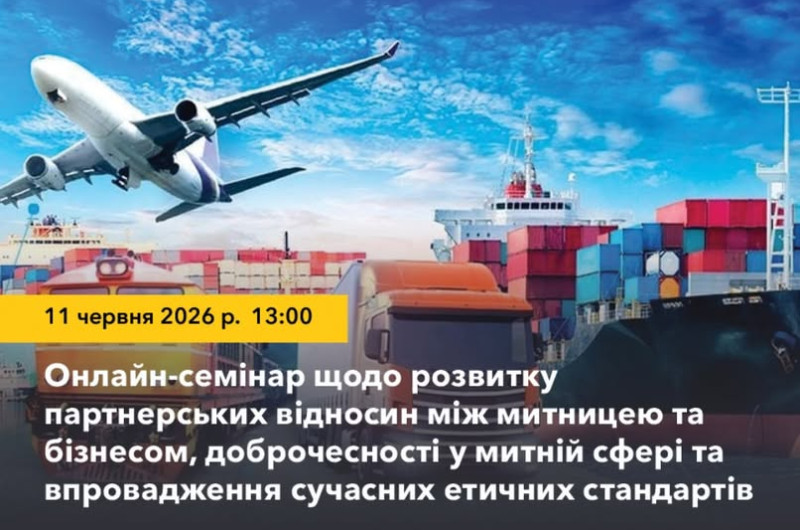
On June 11, at the initiative of the State Customs Service of Ukraine and the Public Council under the State Customs Service, the World Customs Organization held the 2nd online seminar on the development of partnership relations between customs and business, integrity in the customs sector and implementation of modern ethical standards.
The event discussed:
- the draft Code of Ethical Conduct for Customs Officials,
- world experience in implementing the Code of Conduct for representatives of the private sector.
Here are some of the highlights:
In her welcoming remarks, Andrea Hampton, Head of the A-CIP (Anti-Corruption and Integrity Promotion) Program and Senior Integrity Officer at the World Customs Organization (WCO), emphasized:
• A Code of Ethics is not a document that simply sits on a shelf. It sets out expected standards of conduct, helps to act in difficult situations and demonstrates the organization’s commitment to the principles of accountability and transparency. The Code creates a culture in which ethical and professional behavior becomes the norm. That is why it is one of the key tools for strengthening public trust in Customs.
• Combating corruption cannot be the sole responsibility of Customs. Interaction between Customs and business requires a shared responsibility for upholding the principles of integrity, preventing corruption and implementing ethical standards. That is why the WCO consistently encourages representatives of the private sector - customs brokers, logistics companies, trade associations and other organizations - to develop their own codes of conduct.
Clear standards of integrity in the private sector are no less important than in customs administrations. They help employees understand expectations regarding professional conduct and make the right decisions in situations of ethical choice.
• The presence of strong codes of conduct in both customs and business creates a reliable barrier against corruption, increases the transparency of processes and reduces the risks of dishonest behavior.
According to Andrea Hampton, world experience confirms that the most effective integrity programs are those built on a partnership between customs and business.
She also noted the importance of a broad discussion of the draft Code of Ethical Conduct for Customs Officials of Ukraine. Such consultations should be aimed not only at improving the document, but also at forming a common understanding of proper professional behavior.
In conclusion, Andrea Hampton called on representatives of the private sector to review and strengthen their own standards of integrity, emphasizing that the eradication of corruption in the customs sector is possible only with the joint efforts of the state and business.
During the online seminar of the World Customs Organization, Alfonso Rojas González de Castilla, Vice President of the Mexican Business Council for Foreign Trade, Investment and Technology (COMCE), Chairman of the WCO Regional Private Sector Advisory Group for the Americas and the Caribbean, shared his experience.
“Customs is a reliable indicator of how society assesses the integrity of public administration. That is why ethics must be an absolute priority for both customs administrations and businesses,” the speaker emphasized.
According to him, effective fight against corruption is possible only with constant and systematic cooperation between customs and the private sector. For this purpose, an advisory group has been created in Latin America and the Caribbean, representing the entire supply chain: exporters, importers, customs brokers, freight forwarders and courier services.
An important step was the signing of a memorandum of understanding between business representatives and customs administrations in the region. The document defines joint commitments to prevent corruption, ensure transparency and comply with ethical standards.
Alfonso Rojas paid special attention to the implementation of the 10th principle of the WCO Renewed Arusha Declaration, which provides for the active involvement of business in the formation of a culture of integrity through codes of ethics and partnership mechanisms with customs authorities.
Every year, a customs forum is held in the region with the participation of customs administrations and business representatives, where the parties report on the implementation of the commitments made and the results of joint work. Also, with the support of WCO, seminars on ethics, transparency and combating corruption are regularly organized.
“Ethics is not a one-time initiative. It is daily, consistent work that must continue constantly. Ethics is a desire to understand how to live and work better,” the speaker concluded.
At the end of his speech, Alfonso Rojas expressed his willingness to share the developed documents and practical experience of cooperation between customs and business, so that they could be adapted taking into account Ukrainian legislation and national characteristics…
…
Summing up the discussion, Alfonso Rojas González de Castilla emphasized the importance of developing a direct dialogue between Ukrainian business and the international customs community.
Heand proposed organizing a series of working meetings with business representatives working in the field of international trade to exchange experience and discuss practical steps to implement the principles of integrity.
“I see that the private sector in Ukraine is already ready for such cooperation. It is only necessary to involve all interested participants and start working together,” he noted.
According to the speaker, the first meeting should be held with customs brokers, because they are an important link in the interaction between business and customs. In the future, other representatives of the trade community may also join the dialogue.
He also expressed confidence that the World Customs Organization and its experts are ready to support such meetings and promote the development of partnership between customs and business in Ukraine.
So, the intentions and readiness for cooperation are already there. The next step is to turn them into specific joint projects and practical results